The 900-bottle wine cellar is the detail that gives it away. When members walked back into the main dining room last fall, the room they knew for years had been rebuilt around a wall of glass and bottles, and the menu in their hands had a new name on it. Chef Simone Concas. Carolina ingredients. A coastal Lowcountry room that finally felt its age in reverse.
If you live in Indigo Run, you have already seen the change from the road. What is harder to see, unless you spend time inside, is how much of the renovation lands off the golf course. The greens got the headlines. The dining room, the halfway house, the fitness center, and the racquet courts are what shifted the club's daily rhythm.
Here is the argument this post is going to make: the reinvestment at The Golf Club at Indigo Run matters less because of the golf and more because of everything around it. The course changes are real, but they are also the kind of changes only a low-handicap player notices on a Tuesday. The clubhouse, kitchen, and amenities are what residents interact with every week, and those pieces now sit on newer footing than most private clubs on the island. That is a real distinction inside a market where many of the club gathering spaces on Hilton Head and Bluffton are 30 or 40 years old, and while some have been renovated, Indigo Run is the most recent to undergo one.
The course, briefly, because it matters
The Nicklaus and Nicklaus II layout is not a new course. It opened in the mid-1990s, and it holds a dual distinction as the first signature course co-designed by Jack Nicklaus and his son, Jack Nicklaus II, and the last golf course built on Hilton Head Island. Those two facts have not changed. What changed this year is what sits on top of the routing.
The club refilled its bunkers and reshaped the greens, expanded putting surfaces by over an acre to bring them back to their original contours, seeded them with Champion G12 Ultra Dwarf Bermuda, and added no-mow and natural areas in the roughs. That last piece is what a resident sees first on a walk or a cart ride. The rough looks different now. Softer at the edges, less manicured in the transition zones, more in step with how Lowcountry courses have been trending for a decade.
If you ask the maintenance team which hole benefited most, they will point to the sixth.
"We moved that green forward and to the left and we shaped the green to sit down a little bit. It's got a nice backdrop with the collar and approach and the mounds around the green."
That is Andrew Gerstner, the club's director of golf course maintenance. It is a small edit on paper. On the ground, it changes the club selection off the tee for the entire hole.
The dining room is the real headline
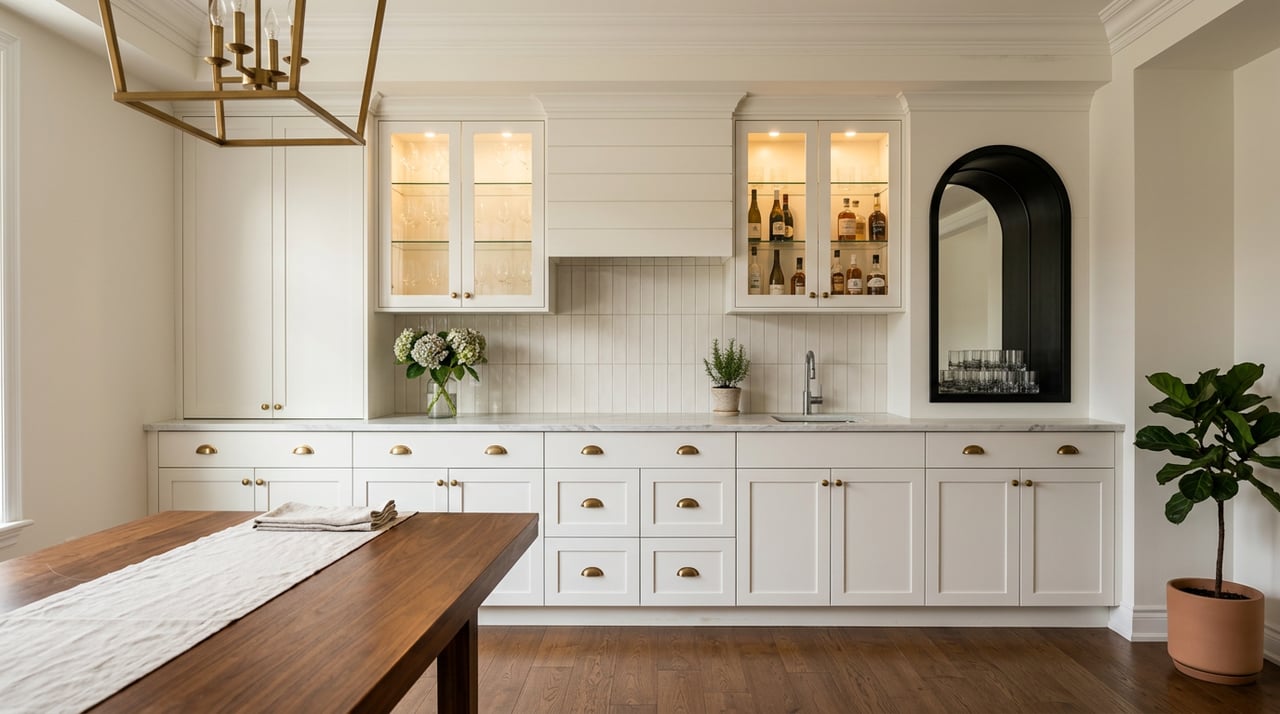
For members who play once a month and eat at the club twice a week, the clubhouse work is the renovation. The scope is broader than a paint job. A brand new grab-and-go halfway house at the turn was set up, gym equipment has been upgraded, and an airy and refurnished main dining room anchored by a striking 900-bottle wine cellar creates a much more modern space. The restaurant embraces a contemporary Lowcountry aesthetic, complemented by a new menu crafted by chef Simone Concas that leans into locally sourced Carolina ingredients.
The Concas hire is worth pausing on. Most private club renovations upgrade the room and reheat the same menu. Bringing in a chef with a defined point of view, and then designing the room around a wine program, tells you what the club is now competing for. It is not competing with the Golden Bear grill down the road. It is competing with the reservations residents make outside the gates on Friday nights.
General manager Bobby Thomas said the intent was "a new, modern, inviting space with that coastal Carolina feel," and he now feels the clubhouse ranks among the most contemporary on an island where the average clubhouse is measured in decades, not years.
A halfway house that changes pace of play
The grab-and-go at the turn is the small change with outsized effect. On a course where the turn used to mean a sit-down stop, a well-designed grab-and-go shifts the entire back nine. Faster tee times. Fewer bottlenecks around noon. More afternoon play in shoulder season. For residents who like a quick nine after work, it is the difference between playing and not playing.
It also matters for guests. If you host family in the winter and want to walk them onto the course for a casual round, the turn no longer requires a table.
Fitness and racquet: the amenities you use on non-golf days
This is where the renovation quietly changes the value proposition for a household that only golfs occasionally. A new Technogym Fitness Center brings state-of-the-art fitness and wellness solutions to a facility that, before the project, was serviceable rather than a draw. Members who were driving off-property for a gym now have a reason to stay inside the gates.
The racquet side got a comparable refresh. The racquet sports facilities, featuring eight hard court pickleball courts and six Har-Tru tennis courts, were modernized with new landscaping and updates to fencing around the property. Pickleball has been the leading indicator on Hilton Head private club demand for three years, and eight dedicated hard courts inside a private club is a meaningful number.
A quick reference for how the pieces sit today:
| Amenity | What it is now |
|---|---|
| Golf course | 18 holes, Nicklaus and Nicklaus II design, Champion G12 Ultra Dwarf Bermuda greens, expanded contours |
| Main dining room | Refurnished, coastal Lowcountry aesthetic, 900-bottle wine cellar, new menu by chef Simone Concas |
| Halfway house | New grab-and-go format at the turn |
| Fitness | New Technogym fitness center |
| Racquet | Six Har-Tru tennis courts, eight hard-court pickleball courts, new landscaping |
What it means if you play at Golden Bear or use Sunningdale Park
Not every Indigo Run resident is a member of The Golf Club. That is the useful thing about how the community is built. Directly next door to the public-access Golden Bear Golf Club at Indigo Run is a private member-only facility, The Golf Club at Indigo Run. The two clubs share a driving range, and both come under the Invited umbrella.
Golden Bear stayed open through the private club's summer closure and during the renovation, members of the private club had reciprocal play at the Country Club of Hilton Head or at Golden Bear. That reciprocity ran in one direction, but the practical takeaway for residents is that Golden Bear absorbed a lot of the neighborhood's golf traffic during the transition and is still the everyday option for anyone who wants a Nicklaus course without a membership. Rates at Golden Bear often dip under $70 in the afternoon, which is the informal price signal a lot of residents use to decide between a twilight round at home and a drive across the island.
For households who lean more toward tennis, pickleball, or the pool than golf, members of both clubs, The Golf Club and Golden Bear, have full access to the private Sunningdale Park Racket Club and Swim Center centrally located within Indigo Run. That shared facility does a lot of quiet work in this neighborhood. It is the reason a two-club community feels like one.
Why the renovation has already changed demand
The membership office noticed a shift before the ribbon cutting. The changes have had more than a cosmetic effect, sparking renewed interest in the club, with an uptick in membership demand since news of the renovation broke, according to director of membership sales Stephanie Mensing. Word traveled the way it usually does inside gated communities on the island. Members told friends up north. Social posts did the rest.
For a resident, that is worth reading as a small leading indicator on the neighborhood itself. Private club investment tends to precede a period of stable to rising interest in the homes that surround it, because the club is the reason many buyers came to the community in the first place. That does not mean prices move in a straight line. It does mean the amenity story a neighbor tells at a dinner in New Jersey next month is a different story than it was two years ago.
Indigo Run is also unusual in its layout. The course is part of the community, but given the holes are lined with dense stands of oaks, pines and cypress trees, many of the homes are set well back from the fairways. That buffered relationship between the residential streets and the golf property is part of why the renovation registers as a lifestyle change rather than a construction disruption. Most residents did not lose a view when the club closed for the summer. They gained a new room to walk into in October.
A short list of things to try if you have not been back
- Book a Friday dinner in the main dining room and see the wine cellar in person.
- Play the sixth hole from the tees you usually use, then from one set back, and read the new green shaping.
- Take a fitness class at the new Technogym center on a rainy morning instead of driving off-property.
- Try the grab-and-go at the turn on a nine-hole afternoon and see whether your round finishes faster than it used to.
- If you are on the racquet side, put a standing pickleball game on the calendar. Eight courts means you will not wait.
If you are thinking about your own move inside Indigo Run
The renovation makes Indigo Run a more interesting story to tell buyers, whether you are staying in the community and moving up, downsizing to a smaller footprint near Sunningdale Park, or introducing family members to the neighborhood for the first time. If you would like to talk through what has changed, what is on the market inside the gates, and how the club investment fits into a longer view of the area, Stefany Cerame is available for a private conversation. Schedule a consultation when the timing is right for you.